

Prioritizing Play, Creativity, and Building a Bigger Life
A conversation with Rachael Renae about creativity, self-trust, and reclaiming joy in adulthood

The Second Act is a weekly newsletter packed with obsessively-curated recommendations and ideas—let’s get to it!
There’s a certain kind of exhaustion that comes from feeling like everything we do needs to be productive. Every hobby should become a side hustle. Every creative impulse should become content. Every interest should somehow justify itself.
So many adults quietly lose touch with creativity not because they aren’t creative, but because somewhere along the way they learned that playfulness, curiosity, and experimentation weren’t valuable unless they produced something measurable.
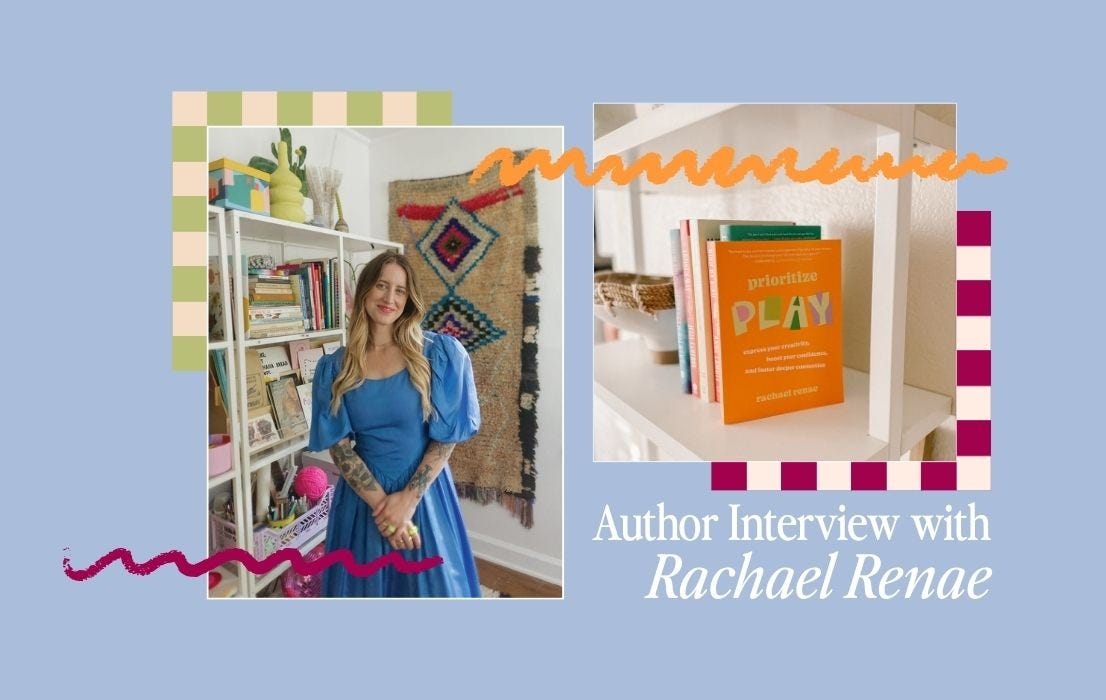
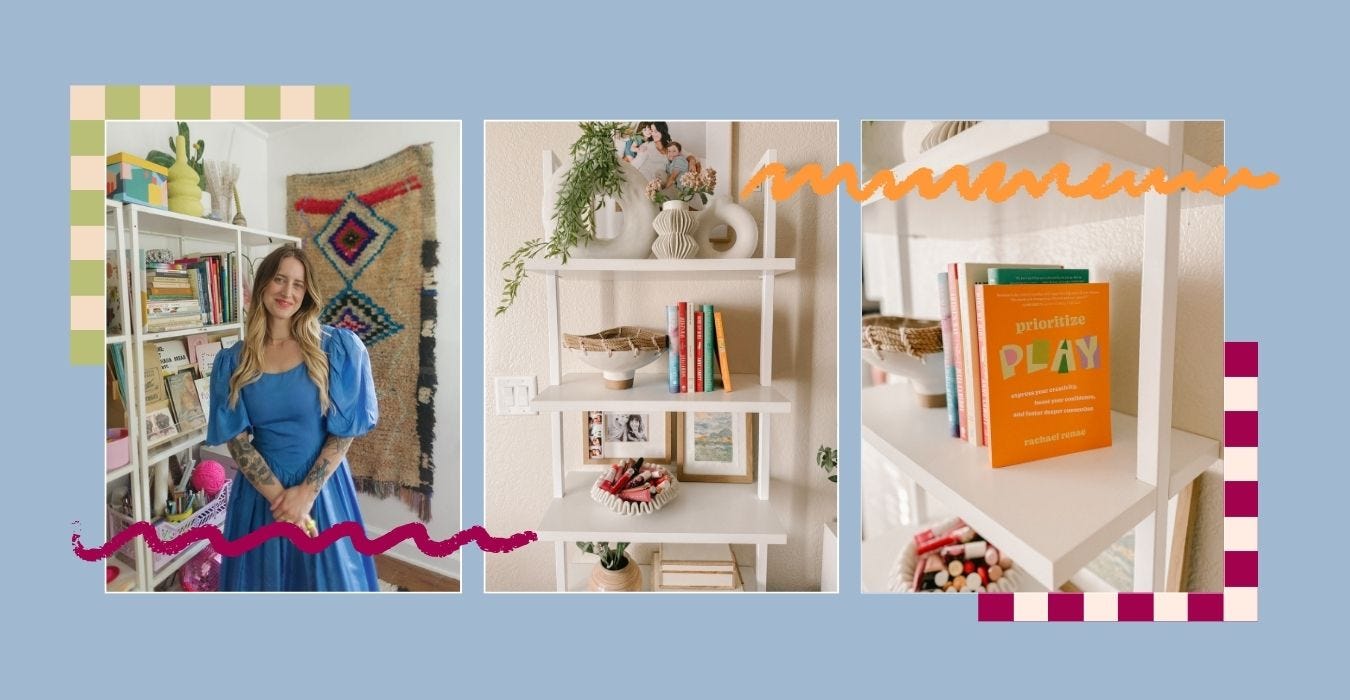
That’s what immediately drew me to Prioritize Play by Rachael Renae.
At its core, the book argues that creativity and fulfillment don’t come from endlessly chasing productivity or trying to become a “successful creative” in the traditional sense. Instead, Rachael explores the idea that the missing piece for many of us is play itselff. Doing things simply because they make us feel alive.
One of the things I appreciated most while reading is how expansive her definition of creativity feels. The book reframes creativity as something much broader than art, writing, or music. It’s about curiosity, self-expression and connection. Trusting yourself enough to try things without needing to be “good” at them.
Through mindset shifts, reflections, prompts, and exercises, Prioritize Play encourages readers to reconnect with forms of play that feel natural and energizing to them, release perfectionism, and stop treating joy like something that has to be earned first.
The book feels spiritually adjacent to works like The Artist’s Way and The Creative Act: A Way of Being, but with a more contemporary and community-oriented lens, especially around redefining creativity outside of hustle culture and performance.
Today, I’m so excited to share my conversation with Rachael about creativity, adulthood, self-expression, and building what she calls a “big, juicy life.”
Interview with Rachael Renae
Danielle Wraith:
One of the things I loved most about the premise of Prioritize Play is how expansive your definition of creativity feels. What first inspired you to rethink creativity through the lens of play rather than productivity or talent?
Rachael Renae:
I love this question! When I started to intentionally explore my creativity and talk about it online, I got pushback from folks like “I could never do that, I’m not creative” or “I could never be good at that”. This made me realize that so many of us have internalized beliefs about what creativity looks like, and I wanted to find more approachable, relatable language to gentle coax people into finding their creativity without realizing it. Play became the umbrella term that most people can relate to and is very approachable because there is no expectation on the outcome except fun!
Danielle:
So many adults feel disconnected from creativity because they believe they’re “not artistic enough” or that creativity only counts if it becomes profitable. Why do you think so many people lose touch with play as they get older?
Rachael:
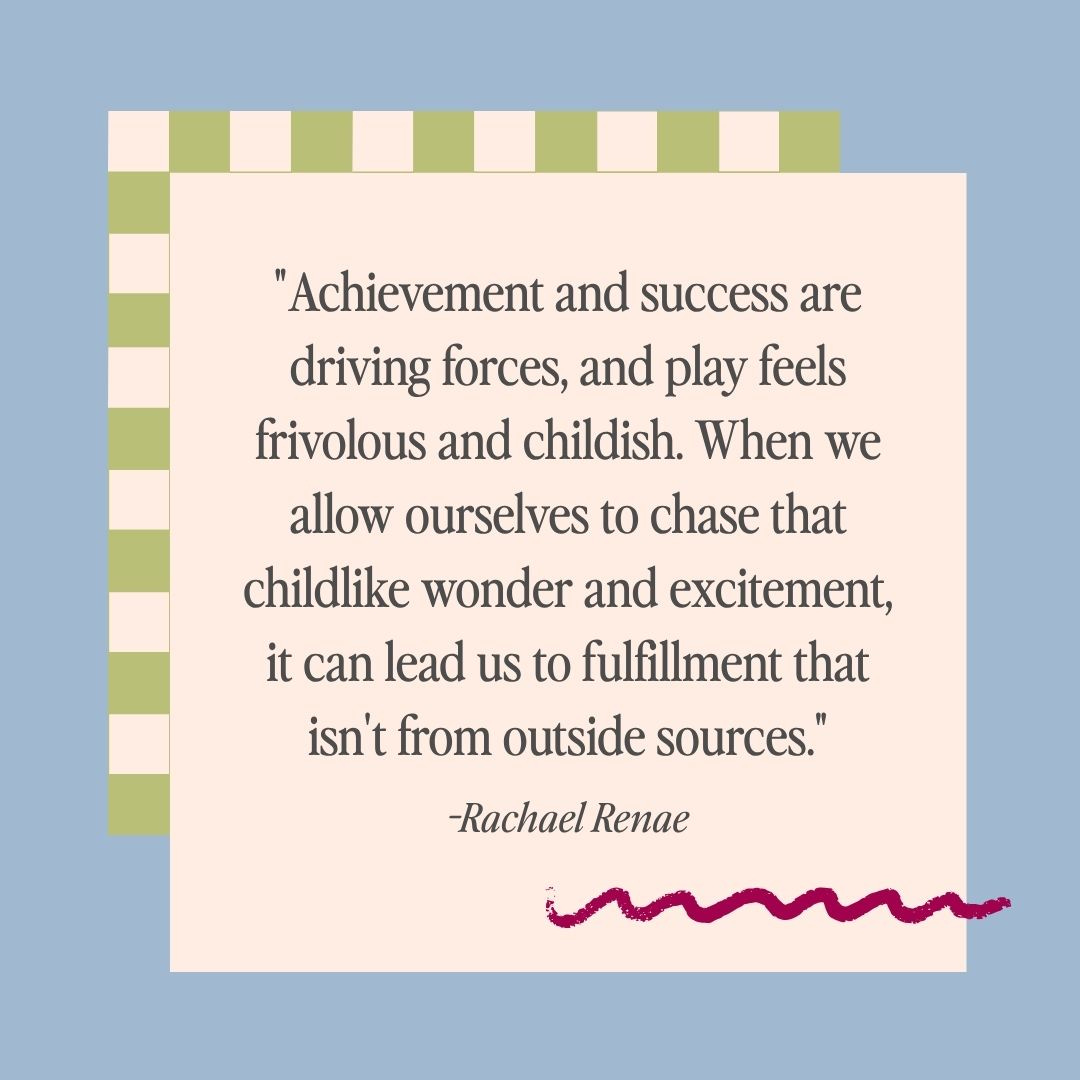
I think it’s part of our culture! We live in a society where so many of us are taught to see our value in our job titles, our productivity, or how much money we can make. Achievement and success are driving forces, and play is counter-intuitive to that because on the surface it feels frivolous and childish. When, actually, when we allow ourselves to chase that childlike wonder and excitement, it can lead us to fulfillment in our lives that isn’t from outside sources. I think societal conditioning teaches us to tie our identities with our jobs, so we put all of our energy toward that, instead of spending time recharging our creative and emotional batteries through play.
Danielle:
You write about building a “big juicy life,” which I love as a concept. What does a big, juicy life personally look like for you right now?
Rachael:
I love that you’re on board with BIG JUICY LIFE! :) When I think about my future self at, let’s say, 85 years old, I want to be able to look back and feel proud that I tried. I followed my curiosity, made the scary decisions, and squeezed the juice out of life. And I know that’s an intimidating phrase sometimes, but BIG JUICY LIFE doesn’t have to mean we’re all quitting our jobs and becoming landscape painters in the South of France (though I really back that decision if someone wants to do it!). Big & Juicy are different for all of us, but we have to take some time to reflect on what that is. So right now, for me that looks like chasing my dream of living as an artist who yaps about play! I try to live my ideal days where I have a slow, cozy morning cuddling my cats, sipping my coffee, and doing some morning journaling. Then I do some play-based work like facilitating webinars for my creative community, The Juice Box, or coordinating creative play workshops. In the afternoons I like to have some time for movement (I’m a jock! That’s part of my personal play practice!) and then some creative studio time. That can look like a visit to my community ceramics studio or working at home on a papier-mache project. Ideally, I’m eating a meal with one of my besties before I read and snooze early. In the broader sense, a big, juicy life is one where I allow myself to stay curious, try new things, let myself fail and be embarrassed, make decisions that progress the plot of my life, and check in with myself regularly to make sure I’m not living on auto-pilot.


Danielle:
Was there a specific moment in your own life when you realized play was something you needed to intentionally prioritize again?
Rachael:
It wasn’t a singular moment, but more the experience of doing it before I named it. Like so many other folks, when I started working from home during Covid, I kind of lost myself. Or rather, I had the space to realize that I wasn’t living my life for me. I was going through the motions, chasing goals that I thought I should have instead of goals I set for myself. With all the time at home, in my own brain, I started yearning for a different type of life. I learned new creative skills via webinars and instagram. I let myself “be bad” at creative practices like painting. I started experimenting with personal style. All of that was just to find fulfillment, and after sharing a lot of that journey online, I realized that I was prioritizing play in my life.
Danielle:
I think many readers, especially women, struggle with guilt around resting, pursuing hobbies, or doing things simply for joy. What would you say to someone who feels like play has to be “earned” first?
Rachael:
Ugh you’re so right. So many of us women are socialized to put others’ needs before our own, so when we do prioritize our own needs it feels wrong or bad. I like to remind myself that the to-do list will always be there. When I find myself saying things like, “I’ll work on the project once the chores are done” or “I’ll try that class when I have more time”, it’s me prioritizing responsibility over play, when they really should be equally prioritized for a balanced life. Sometimes that looks like frozen food for dinner so that I can spend more time quilting. Sometimes it looks like a laundry pile for an extra few days so that I can get to the ceramics studio after work. We naturally prioritize the important things, and it takes practice, but we can make play one of the priorities in our lives. It’s human nature to create and connect, and when we ignore those practices, especially when we’re putting others’ needs before our own, we’re running on an empty battery. Play refuels us!
Danielle:
Your work feels especially resonant in a culture that constantly pushes optimization and productivity. Did writing this book change your own relationship to achievement or success in any way?
Rachael:
What a great question! I would say that this book actually allowed me to release the vision of success I was grasping onto for much of my life. During the writing process, I quit my engineering career, which is what I studied in undergrad and grad school. I thought that by getting a job that met the markers of success from the outside (a woman in STEM! a success!), I would be fulfilled. I did it for over a decade, and I didn’t hate it, but it definitely wasn’t my passion. I think compiling all the work I’ve done about play and writing this book helped me give myself permission to redefine success for myself — in the same way that we all get to define our big, juicy lives.
Danielle:
One thing I appreciated while reading was the reminder that creativity doesn’t have to be tied to being “good” at something. How do you personally move through perfectionism or self-judgment when trying something new?
Rachael:
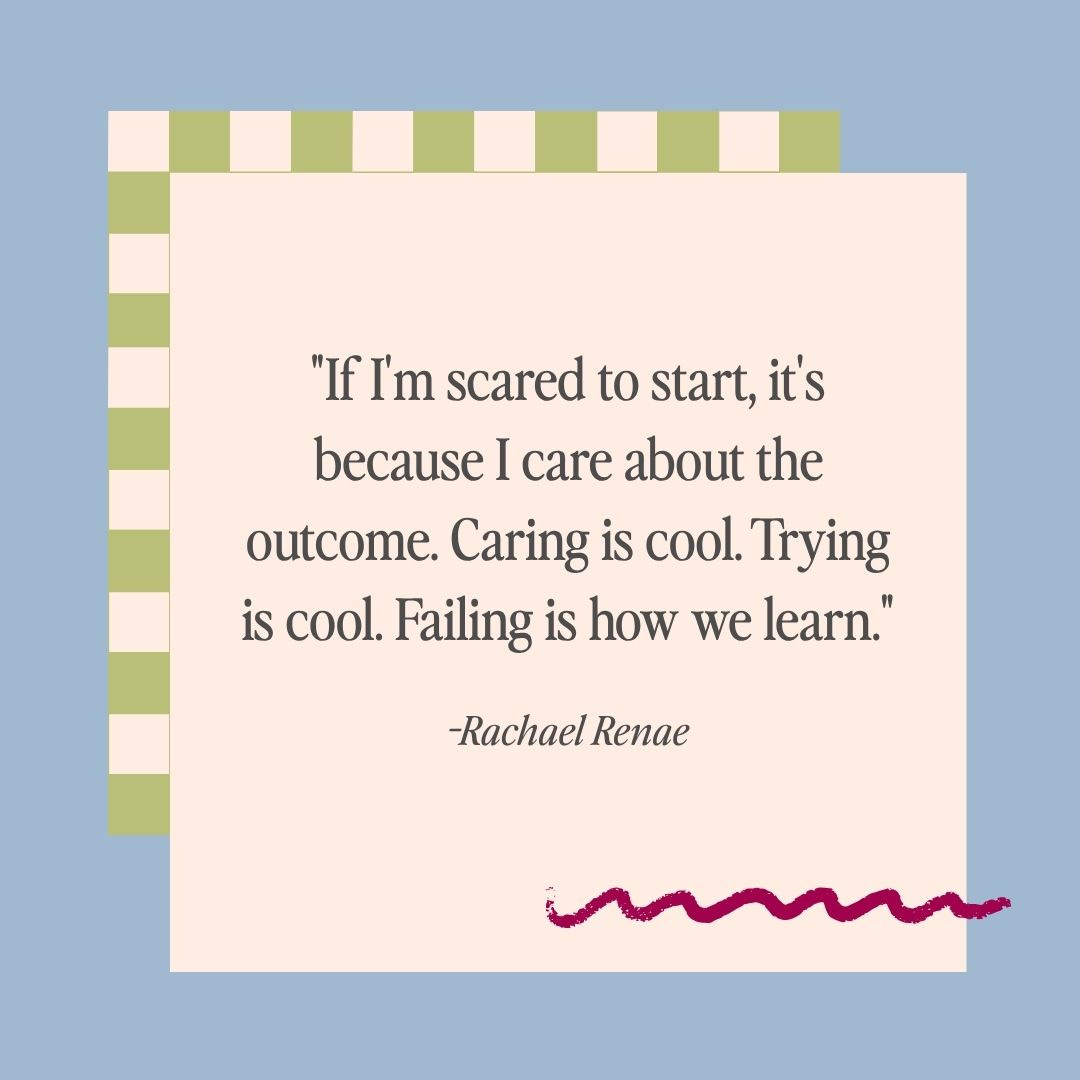
It’s still so hard! We sure are our own worst critics sometimes! When I’m new to something and I’m “bad” at it, I try to keep two reminders front of mind. First, if I’m feeling embarrassment, it just means that I care! If I’m scared to start, it’s because I care about the outcome! Caring is cool. Trying is cool. Failing is how we learn. And I know I would never shame someone else for being bad at something new, so I need to give that grace to myself.
Second, especially if it’s a creative project with an outcome, I’ll start by trying to make the WORST version of the thing I have in mind. It breaks through the barrier of just getting started, usually results in some giggling, and shakes off the expectation that it has to be perfect.
That shame and frustration and embarrassment still come up, but I try to acknowledge them, and cheer myself on for even trying.
Danielle:
Were there any forms of play or creativity you unexpectedly reconnected with while writing this book?
Rachael:
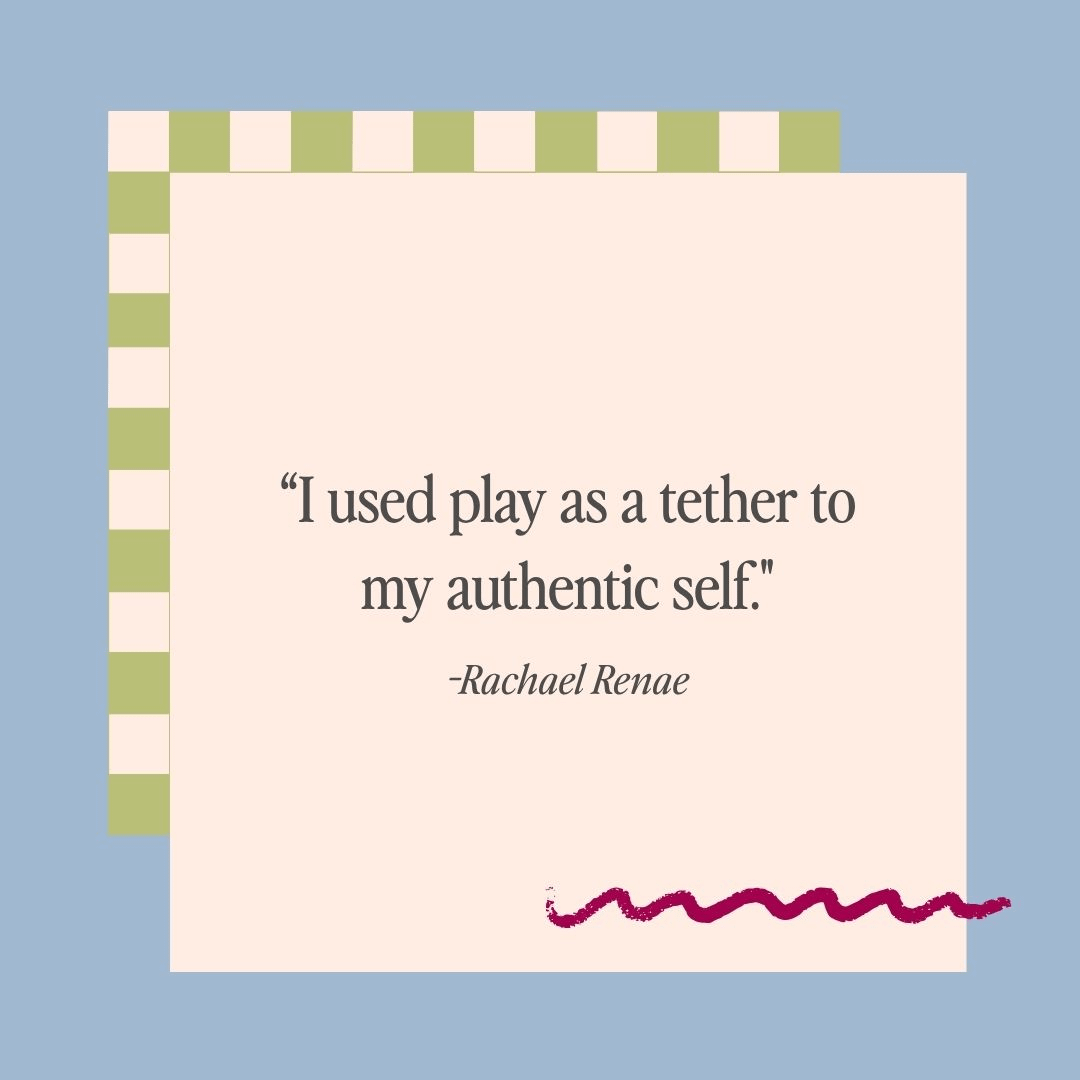
While I wrote the book, I was living back at my parents’ house because my dad was at the end of his battle with cancer, and I moved back to help caretake and spend time with him before he died. I didn’t know what to expect with that experience, but I used play as a tether to my authentic self. I still wore colorful clothes. I did a lot of quilting. I spent a lot of time rock hunting at the beach. I wore glitter. I made sure I used the good plates, the colorful silverware, the nice napkins.
This isn’t quite answering your question in terms of unexpected reconnection, but I used it as a tool to make sure I didn’t lose myself in grief. I’m so grateful for that time spent with my family and my dad before he died, and I think play was my anchor through that whole experience. It continues to be as I process my grief, as well.
Danielle:
What are some small ways people can begin incorporating more play into everyday life, even during busy or overwhelming seasons?
Rachael:
I love to incorporate play into what we’re already doing in our lives. We’re already getting dressed, making dinner, talking to our people, going to work. How can we take tiny actions to make those activities more playful? I like to gamify things, so I come up with challenges for myself a lot. Maybe it’s wearing monochrome (all one color) on Mondays or dressing up for Fancy Fridays. Maybe it’s taking a color walk on your lunch break where you try to spot every color in the rainbow on your route. Maybe it’s asking your friend to send you a random ingredient idea that you have to incorporate into dinner each week. Maybe it’s just having a list of silly questions (which I do) to ask when you’re in a group of people. There are so many ways we can make our existing routines more playful, and it starts with being intentional. I talk about this in Chapter 5 and then give some challenges in Chapter 6 of the book, which I call P(l)ay Attention challenges! I also have some resources for download here that can help folks start to shift toward a playful mindset.
Danielle:
I’d love to hear a little about your own creative process. What did writing Prioritize Play actually look like day-to-day?
Rachael:
My creative process looks different each day, but I’ve fallen into a nice routine of slow mornings with morning journaling to do a brain dump of everything floating in my head. This is where I jot down ideas and let projects flesh themselves out. Then usually some computer work like checking in on The Juice Box community, working on presentations or workshops, doing admin. Usually after lunch, I take a break and go do some movement (lately I’ve been really into lifting weights) and do an analog creative activity like working on a ceramics or papier-mache project. A few nights a week I see pals and try to eat meals with people. I usually do some house chores in the evening and read a novel in bed before I sleep!
But to answer your question about the writing process, I really have to follow my motivation, so I didn’t create a rigid schedule for myself. I thrive with deadlines (star student, people pleaser over here), so I knew what dates my editor needed drafts, and tried make sure I gave myself plenty of time to meet them. I fit the writing into the morning computer time of that schedule I just described, but then did a lot of noodling on topics, flow, and challenges while I did my creative work, walked on the beach, or gabbed with friends.
Danielle:
What do you hope readers feel or walk away with after finishing the book?
Rachael:
I hope they feel encouraged to give themselves permission to try things! To realize that they are the creative directors of their own lives, and what works for someone doesn’t have to work for them. We get to decide what our lives look like, but it’s also our responsibility to take action to create it!
Danielle:
Last question: What’s bringing you joy lately? It can be anything, a ritual, a creative project, a snack, a TV show, a tiny obsession, anything at all.
Rachael:
In the past year, I’ve been carrying around a little pouch of tiny dice with me in my purse. Whenever I meet a new person, I say “I have a prize for you” and make them hold out their hand for a their tiny dice prize. It’s usually unexpected, and received with joy, and that makes me so happy! That’s prioritizing play! I also keep a little pouch with a shell, a pom pom, my own dice, a favorite rock, and a googly eye in my bag, and it’s fun for me to know that those silly things are with me.
One of my favorite things about this conversation was the reminder that creativity doesn’t have to look impressive to matter. It can be small, messy, playful, private. It can simply be something that brings you back to yourself.
A heartfelt thank you to Rachael for taking the time to share her story and insights, and to her publishing team for providing an advance copy and helping make this conversation possible. It was such a joy to read Prioritize Play and spend time discussing creativity, curiosity, and what it means to build a fuller life.
If this conversation resonated with you, Prioritize Play officially releases TODAY, June 9, 2026.
You can order Prioritize Play here:
And you can follow Rachael Renae for more on creativity, play, and building a fuller, more connected life. rachaelrenae.com | @rachelranae
Did you enjoy this interview? I had so much fun doing this and putting it together. What’s one form of play or creativity you’ve been wanting to reconnect with lately? I’d love to hear in the comments.

The Second Act is an entirely reader-supported publication written and created by Danielle Wraith. Click here to subscribe or gift a friend a subscription here (if a friend sent you this —tell them thanks!). Anything you want covered? Questions? Reply with a comment below! You can also find me on Instagram. Please come say hi!
I have been looking forward to this interview! I love Rachael's thoughts on play. From the title, I thought the book would be more geared towards parenting, so I'm really glad we got this sneak peek. I'm even more excited about the book now.